The B-17 bomber stands among the most iconic aircraft of World War II. Used early-on during the war in the Pacific, it came to be the most heavily used bomber in the European Theater. Perhaps the most famous B-17 is the Memphis Belle, popularized in a 1990 film. Lesser-known but having a more familiar local name here in Arkansas was the B-17 called Miss Ouachita.
Development of the Boeing B-17 Flying Fortress first began in the 1930s. The aircraft sported four engines and was considered fast and agile for its time and type. Termed a “heavy” bomber, the United States utilized the B-17 in the Pacific in the early years of World War II, conducting bombing raids on Japanese shipping and airfields. But, its most significant impact came in Europe. Of the total amount of bombs dropped on Nazi Germany, the B-17 delivered over 42 percent. In fact, the B-17 dropped more bombs than any other aircraft during World War II.
The Miss Ouachita arrived in Europe in April of 1943 ready for service. She was initially assigned to the 303rd Bomb Group, but after only eight days moved to the 306th. After that, the plane served for about a month before being damaged. Once repairs were made, Miss Ouachita went to the 91st in late August. There, the plane made its first sortie on September 3. Eleven different pilots flew Miss Ouachita in eighteen missions with the 91st Bomb Group. Four of those were strikes at Frankfurt, Germany, each with a different crew.
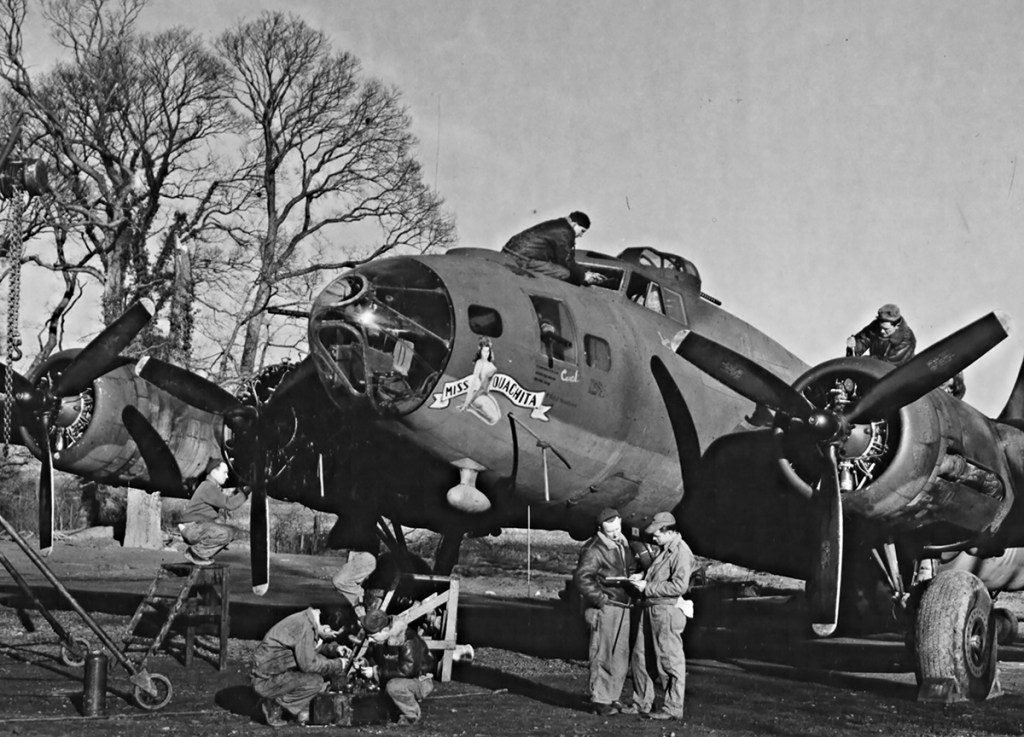
Spencer Osterburg’s crew flew the plane when it went down February 21, 1944. Miss Ouachita was enroute to strike the Luftwaffe airstrips around Achmer when the aircraft was attacked and damaged by Fw 190s fighters. The pilots headed for safety in clouds at a lower altitude, but the Germans continued their barrage. Additional passes against the Miss Ouachita resulted in more damage and casualties among the crew. As a last resort Osterberg executed a belly landing in an open field. German soldiers immediately took the surviving airmen captive.
The pilot credited with taking down Miss Ouachita was German ace Heinrich “Heinz” Baer. Baer served throughout World War II, flying more than a thousand combat missions. During that time he survived being shot down a remarkable eighteen times! He claimed to have downed 228 enemy aircraft, although official records credit him with closer to 220—still an amazing number. His call sign was “Bussard 1” (Buzzard) reflecting his fierce nature. Ironically, after the war Baer continued working in aviation but was killed in an air accident in 1957.
Heinz Baer visited the site of the downed plane the next day for publicity photographs with the machine he had succeeded in bringing to the ground. Baer is shown below looking at the plane. The feat was considered a great achievement since the Luftwaffe could utilize the Miss Ouachita to learn more about the technologies and combat techniques employed by the B-17. Plus, it could possibly be repaired and put back into use.
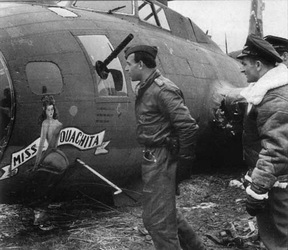
But, the aircraft would not return to the skies. The Miss Ouachita met its final demise just two days later when Allied forces spotted the plane on the ground and repeatedly strafed it to eliminate any potential benefit to the enemy. It caught on fire and was totally demolished. The Germans removed some of her parts and later turned her into scrap metal, but overall, the Miss Ouachita proved to be of little worth to the Luftwaffe or to Germany, except for publicity purposes.
 arkansashistory.online