The Civil War brought great disruption to the state of Arkansas. The turbulent times affected people from every walk of life and in every part of the state. Of those who joined the military, some stayed in Arkansas with state units, but others went east of the Mississippi to fight. However, one Hot Spring County man found a very distinctive niche during the great conflict, becoming known as the “Arkansas Drum Maker.”
Henry Clay Ward was born in North Carolina in 1830, one of seven children of Francis Asbury and Sarah Miller Ward, and grandson of Leonard Ward, a Revolutionary War “Minuteman.” Francis also spent time in military service, as a part of the Virginia Cavalry. He and Sarah were among the early settlers of Hot Spring County, originally settling at Rockport in 1849. Their first home stood on the Ouachita River near the mouth of Blakely Creek. They later moved to the Social Hill area about 1861. The Wards’ place served as a well-known landmark along the Military Road, as evidenced by an August 10, 1864, scouting report. A.A. McDonald of the Arkansas state troops noted that his men would change their location from “near Morrison’s Island” up to “Frank Ward’s tomorrow on the Military Road.”
Francis “Frank” Ward’s son, Henry Clay Ward, became a man of many talents. He was quite a musician and was particularly good at playing the violin. He became well-known for this, especially for performing the famed “Arkansas Traveler” tune, even playing it with the tune’s composer, Sandford Faulkner. Ward was also said to have a “natural love of mechanics” and an “inventive genius.” So, it is not surprising that he seized the opportunity to utilize his unique abilities and musical interests to obtain a contract to build drums for the Confederate Army at the beginning of the Civil War.
Drums played a significant role in the military during the war. At that time, they functioned as much more than a ceremonial or symbolic feature of a unit. Drummers communicated officers’ commands to troops, signaling such instructions as retreat, advance, reveille, bedtime, or quickstep. In this way, drummers became responsible for heralding troop actions, performing a necessary part in executing battles as well as maintaining soldiers’ day-to-day schedules. Very young men or even pre-teen boys most often filled the role of drummer at the time, since older, more able-bodied men were needed on the front lines, hence the name “drummer boys.”
Ward furnished drums to both the Confederate and Union armies. His drums were so widely used that he became known as the “Arkansas Drum Maker,” a moniker that persisted for many years.
After the war, Henry Clay Ward lived on his father’s Social Hill farm where he farmed and distilled brandy and whiskey. His operation was capable of producing twenty gallons a day. He made “fine liquors” which primarily went to physicians for medicinal purposes. His “Ward’s Best” proved to be especially popular.
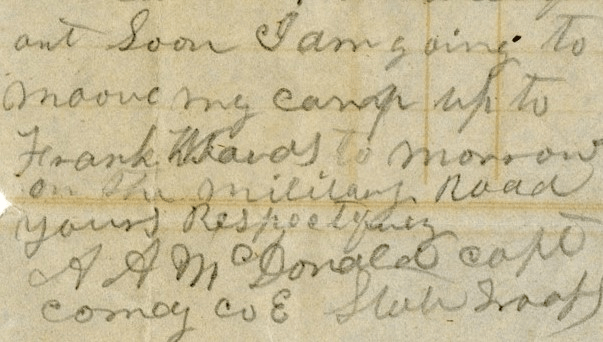
(complete original document available at the Arkansas State Archives, Little Rock)
 arkansashistory.online