Heading north from Arkadelphia toward Bismarck, amidst the more modern surroundings of stores, homes, and churches, a traveler will come upon a Victorian home standing to the east side of Highway 7. Known as the Hodges House, the Hot Spring County home was added to the National Register of Historic Places in 1995. The National Register of Historic Places is the official list of the Nation’s historic places worthy of preservation because of their contribution to our country’s history and heritage.
The one-story wood-frame residence was constructed by Dr. Lee Bray and his wife Clara in 1907. Farming was the primary activity in the community, although much of the area’s virgin timber was being cut at about the time of the house’s construction. A railroad for hauling logs out of the forest crossed the area about one mile north of the home. No paved roads yet existed.
The Brays sold the house in 1925 to Dr. T.L. Hodges and his wife Charlotte. The home was used as both a residence and physician’s office. Charlotte Hodges had a good knowledge of chemistry and assisted her husband with prescription medications for patients. One particular medication they developed for the treatment of rheumatism became quite popular, and people from around the state traveled to Hot Spring County to purchase it.
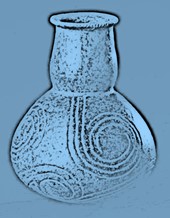
Even with their work in medicine, the couple made more important contributions in the fields of archeology and history. Over the course of many years, but primarily during the 1930s and 1940s, the Hodges collected pre-historic artifacts (especially pottery and stone tools) as well as books and maps about early Arkansas. Most of their archeological collection was gathered when agricultural improvements or floods threatened preservation. It remains today as one of the most significant collections of Caddo artifacts anywhere, and includes some of the best examples of prehistoric ceramic art of the Ouachita valley region.
The Hodges published articles about their collections and about the prehistory of the Ouachita River valley. They helped establish the first Arkansas Archeological Society, assisted in the formation of the Arkansas Historical Association, and contributed articles to that organization’s quarterly journal. As one of their most significant preservation efforts, though, the Hodges purchased an important archeological site in Mississippi Valley prehistory—one believed to be the location of the first European settlement in Arkansas (Arkansas Post) and a Quapaw village. Today, the property is known as the Menard-Hodges Site and is a National Historic Landmark. In 1977, the Joint Educational Consortium of Arkadelphia acquired the Hodges Collection, which includes about 50,000 pieces. The Arkansas Archeological Survey station at Henderson State University has curated, inventoried, and preserved the material for use by future generations. Through the years, artifacts have been displayed at various locations around Arkadelphia, and today may also be seen at the Caddo Center on the Henderson campus.
 arkansashistory.online