The site of Hot Spring County’s Butterfield community was at one time an important stop on the stage and rail lines between Malvern and Hot Springs. Certainly, many have heard of the Butterfield Overland stage that operated in the United States prior to the Civil War. The Butterfield Overland Mail Company, founded in 1858, ran from Fort Smith, Arkansas, to California, and was operated by John Butterfield. However, the Butterfield Overland Dispatch, founded in 1865, traversed Kansas and Colorado, and was operated by David Andrew Butterfield of Kansas. It was David Butterfield that would leave his footprint in upper Ouachita River valley history.
David Butterfield was born in Maine in Maine in 1834. He moved to Kansas by the late 1850s, and then to Denver, then back to Kansas. There he served as an agent for a line of packet-boats that made weekly trips to St. Louis. Butterfield recognized many opportunities in the West’s emerging transportation industry. He opened the Butterfield Overland Dispatch to meet those needs. The first coach left Atchison, Kansas, for Denver, Colorado, in 1865. Atchison became a transportation hub for people and goods heading west. In 1866, Butterfield sold his line to a man who sold it to Wells Fargo a short time later. However, stagecoaches proved to be short-lived after the arrival of the railroad.
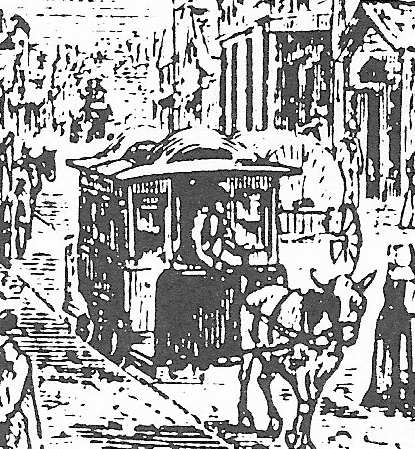
Butterfield moved to Mississippi for a time, and then to Hot Springs, Arkansas, to build a mule-drawn trolley system for the town in 1874. His initial “system” began with two small wooden streetcars that had arrived by train in Malvern and shipped by oxcart to Hot Springs.
While continuing to build his business, Butterfield agreed to play a role in the construction of a narrow-gauge railroad from Malvern to Hot Springs for its owner, Joseph Reynolds. Always the entrepreneur, Butterfield understood how bringing more people to the spa would increase his own trolley business. The Arkansas Gazette reported that Butterfield met with various rail officials and capitalists to make preliminary plans to lay the track to Hot Springs. By September of the same year, the Gazette proclaimed that four miles of narrow-gauge rail had been completed. While various segments were finished and put into operation to shorten travel times, it was in March of 1876 that passengers made the first trip all of the way from Malvern into the Hot Springs depot.
Unfortunately, David Butterfield did not live to see full completion of the line. He was murdered in 1875 by a vengeful employee, who Butterfield had criticized for mistreating one of his mules. The man hit him with a wagon yoke and Butterfield died soon thereafter. The stop along the Diamond Jo Railroad route between Malvern and Hot Springs where the murder occurred was named in his honor, and the community continues to bear the Butterfield name today.
The Hot Springs trolley carried on operations with other Butterfield family members in charge. The mule-drawn cars were eventually replaced with electric ones in 1893. The streetcar system reached its peak when its tracks covered nine miles in the city. Buses replaced the streetcars in 1938.
 arkansashistory.online